

Separate chambers
The research material and liquid occupy distinct chambers within one cartridge. This keeps the components apart until preparation.
The format explained
A dual-chamber peptide pen uses a cartridge with two compartments to keep its components separate. This guide explains the cartridge mechanism, compares common formats and connects the terminology to Zynx's Retatrutide 20 mg and 40 mg research pens.
A dual-chamber cartridge, also called a double-chamber cartridge, has two compartments separated by a movable stopper. In a common design, one holds freeze-dried material and the other holds a diluent, the liquid used to dissolve it. A bypass channel allows the contents to meet within the cartridge.
SCHOTT Pharma's double-chamber cartridge description explains this arrangement. It also describes designs for two liquids, so the chamber count alone does not tell you the supplied contents.
The research material and liquid occupy separate chambers within the cartridge.
Diagram key: at the start, the material chamber holds the solid component and the liquid chamber holds the diluent. The internal channel is the bypass connecting the compartments in this generic illustration.
The research material and liquid occupy distinct chambers within one cartridge. This keeps the components apart until preparation.
In a bypass cartridge, an internal channel allows liquid to move into the material chamber. The illustration explains this general mechanism.
The components come together within the cartridge. Product documentation provides the specific storage conditions and handling requirements for the supplied material.
The cartridge holds the material. The pen is the surrounding device that holds and operates the cartridge. Whether the cartridge can be replaced depends on the device design.
For example, Ypsomed's reusable YpsoPen accepts replacement cartridges. That example does not establish the compatibility or refillability of a Zynx pen. Those details require documentation for the specific device.
Dual-chamber describes a container with separate compartments. Pre-mixed describes material already dissolved in a liquid. In the powder-and-diluent design illustrated here, the components start apart; they are not supplied together as one solution.
A prefilled pen can contain a solution, as shown in Pfizer's ABRILADA product description. Read the stated contents as well as the format: the word “pen” alone does not specify whether the material is dissolved.
These terms describe different parts of a supplied format. A cartridge is a container, a solution describes its contents, and a reusable pen is the outer device.
| Term | Physical distinction |
|---|---|
| Dual-chamber cartridge | One cartridge has two compartments. In the referenced design, powder and liquid occupy separate chambers before they are combined. |
| Pre-mixed solution | The material is already in liquid solution. A solution may be supplied in a pen or a vial; the term describes the contents rather than the container. |
| Vial | A small glass or polymer container, commonly closed with a stopper and cap. Vials can contain liquid or freeze-dried material. |
| Reusable pen device | A durable outer device that accepts replaceable cartridges. The pen body and the cartridge holding the material are separate components. |
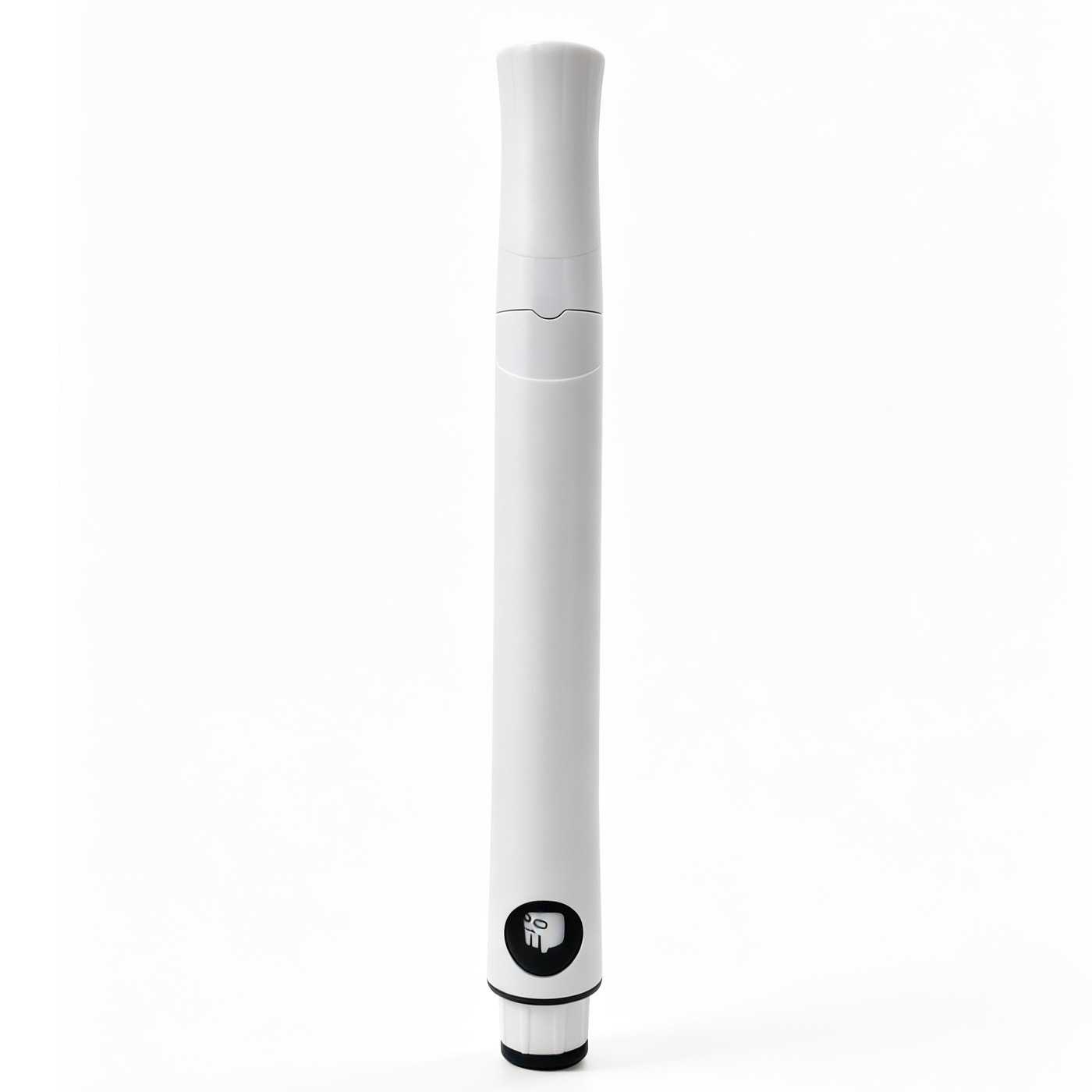
Our flagship research peptide
Zynx lists Retatrutide pens with 20 mg or 40 mg stated total contents per pen. The product page shows the current options, prices and availability. Materials are supplied for laboratory research only.
For the label terminology, read what 20 mg and 40 mg total pen contents mean.
Assess the supplied material separately from its container: check batch-document availability and read the peptide CoA guide.
These manufacturer references explain general packaging and device principles using products unrelated to Retatrutide. They are examples, not specifications or validation of a Zynx device. Mechanisms vary by device.
For the published clinical evidence, read Retatrutide phase 2 vs phase 3: a guide to comparing trials, with a checklist for study populations, follow-up and outcomes.